
Soft Isn’t Always Supportive: What Good Work-Boot Cushioning Should Do
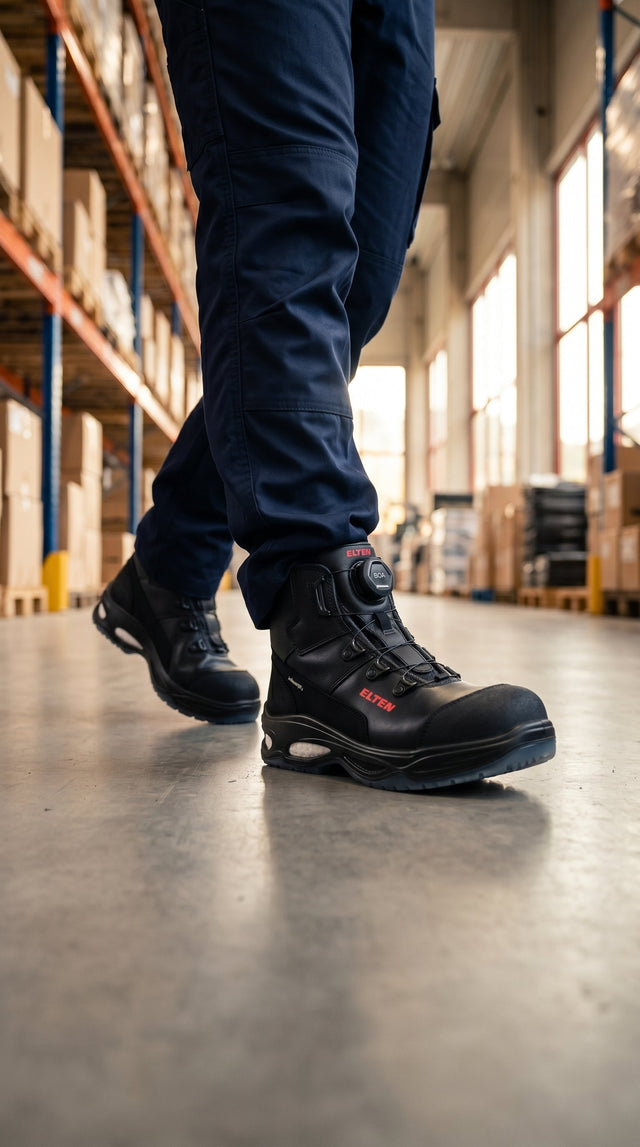
When you first try on a pair of work boots, soft cushioning can feel instantly comfortable.
But that first impression doesn’t tell you how the boots will feel after eight or ten hours of standing, walking, climbing and carrying on hard surfaces.
Cushioning shouldn’t simply feel soft. It should help absorb impact, remain stable under load and support a comfortable walking motion throughout the working day.
So, what separates effective work-boot cushioning from padding that merely feels good in the shop?
Softness and Support Are Not the Same Thing
Very soft foam compresses easily. That can create a comfortable, almost pillow-like feeling when you first put the boots on.
The problem is that softness alone doesn’t necessarily provide stability or lasting cushioning. If the material compresses too far under your weight, your foot may feel as though it is sinking into the boot rather than being properly supported.
Good work-boot cushioning needs to strike a balance:
- Soft enough to reduce the harsh feeling of each step
- Responsive enough to rebound after compression
- Stable enough to support the foot under load
- Durable enough to keep performing across long working days
The real test isn’t how the boot feels during the first minute. It’s how your feet feel toward the end of the shift.
Why Hard Surfaces Make Cushioning Important
Concrete, steel floors, warehouse surfaces and compacted ground don’t absorb much impact.
When you repeatedly walk or stand on these surfaces, the force from each step must be managed by your footwear and body. Over hundreds or thousands of steps, ineffective cushioning can contribute to tired, uncomfortable feet.
Workers who may particularly value effective cushioning include:
- Warehouse and logistics workers
- Factory and production workers
- Tradies working on concrete slabs
- Electricians and maintenance workers
- Couriers and delivery drivers
- Workers who regularly move between vehicles and hard surfaces
- Anyone spending most of the day standing or walking
Cushioning won’t eliminate the physical demands of the job. However, the right boots can make those demands more comfortable and manageable.
What Is Responsive Cushioning?
Responsive cushioning compresses when your foot makes contact with the ground and then returns toward its original shape.
Instead of simply absorbing the force and remaining compressed, the material provides a noticeable rebound. This helps create a smoother, more dynamic feeling as you move into your next step.
Think of the difference between pressing down on a flat sponge and a firm rubber ball:
- The sponge feels soft but stays compressed
- The ball compresses less and quickly springs back
Effective work-boot cushioning sits somewhere between the two. It needs to absorb impact without becoming unstable or losing its shape too quickly.
How ELTEN WELLMAXX Cushioning Works
Selected ELTEN work boots use WELLMAXX sole technology featuring an Infinergy® core developed by BASF.
Infinergy® is an expanded thermoplastic polyurethane—or eTPU—made from thousands of small, closed-cell foam particles. The material combines cushioning with a rebound effect, compressing under pressure and returning energy as it recovers.
In practical terms, WELLMAXX cushioning is designed to:
- Soften the impact of walking on hard surfaces
- Provide responsive rebound with each step
- Help reduce the heavy, flat feeling associated with rigid soles
- Maintain a more dynamic walking experience
- Support comfort across long periods of standing and movement
Rather than relying on an extremely soft footbed, the cushioning is built into the sole system of the footwear.
Cushioning Is Only Part of the Comfort Equation
Even excellent cushioning cannot compensate for boots that don’t fit properly.
If your boots are too narrow, too short or too loose, you may still experience pressure, rubbing or instability. Your foot should have enough room without sliding around inside the boot.
When choosing work boots, consider the complete combination of:
Correct Width
A boot that is too narrow may create pressure through the forefoot and toes. Buying a longer size doesn’t necessarily solve this—it may simply leave excess space in front of the toes.
Look for a width that matches the shape of your feet.
Secure Fit
Your heel and midfoot should feel securely held while your toes have enough room to move naturally.
Stability
Cushioning should not make the boot feel excessively soft or unstable. This is particularly important when carrying loads or working across changing surfaces.
The Right Outsole
Your work environment determines how much grip, flexibility and tread depth you need. Boots designed for indoor hard floors may require different characteristics from boots used on mud, gravel or uneven ground.
Appropriate Upper Construction
A lightweight textile upper may suit active indoor or warmer work, while robust leather may be preferable for demanding sites and rougher conditions.
The best work boot combines cushioning, fit, stability and worksite suitability—not one feature in isolation.
Three ELTEN WELLMAXX Boots for Different Workdays
REACTION, SANDER and MILES all feature responsive WELLMAXX cushioning, but each offers a different combination of fit, weight and construction.
REACTION BOA®: Responsive Comfort for Extra-Wide Feet
The REACTION BOA® Work Boot combines WELLMAXX cushioning with an extra-wide 4E fit.
It is a strong option for workers who frequently experience pressure around the forefoot or cramped toes in standard-width boots. Its robust leather construction suits demanding daily work, while the BOA® Fit System allows fast, precise adjustment.
Choose REACTION if you want:
- An extra-wide 4E fit
- Responsive cushioning for long workdays
- Robust leather construction
- Fast BOA® adjustment
SANDER BOA®: Lightweight, Flexible Comfort
The SANDER BOA® Work Boot combines WELLMAXX cushioning with a lighter, breathable CORDURA® upper.
Compared with a traditional heavy leather boot, SANDER is designed to feel lighter and more flexible on the foot. This can make it particularly attractive to workers who cover large distances, move frequently or work in warmer environments.
Choose SANDER if you want:
- A lighter work boot
- Flexible, breathable construction
- Responsive cushioning
- Fast and precise BOA® adjustment
MILES BOA®: Maximum Cushioning with a Stable Wide Fit
The MILES BOA® Work Boot is built for workers who prioritise substantial underfoot cushioning without sacrificing a robust, supportive feel.
It features a stable 2E wide fit and an extra-thick Infinergy® cushioning core. Its leather construction makes it suitable for workers wanting a more heavy-duty boot with a strongly cushioned walking experience.
Choose MILES if you want:
- Maximum responsive cushioning
- A stable 2E wide fit
- Robust leather construction
- Comfort for long shifts on hard surfaces
Which Cushioned Work Boot Is Right for You?
The right choice depends on more than which boot feels softest.
Choose:
- REACTION BOA® if you need an extra-wide 4E fit
- SANDER BOA® if low weight, flexibility and breathability are priorities
- MILES BOA® if you want maximum cushioning and a stable 2E fit
If you work mainly on concrete or other hard surfaces, responsive cushioning can make a meaningful difference to how your boots feel across the day. But cushioning should always be considered alongside correct sizing, width, stability and outsole suitability.
Comfort That Keeps Working
A quality work boot should do more than create a comfortable first impression.
Its cushioning needs to absorb impact, recover after compression and work together with the fit and sole structure of the boot. That’s what helps provide a stable, responsive feeling—not just during the first few steps, but throughout a demanding shift.
Explore Stitchkraft’s ELTEN WELLMAXX range and find the combination of cushioning, fit and construction that suits the way you work.
Not sure which model or size is right for you? Contact the Stitchkraft team for local fitting assistance or visit our Tullamarine store to try the range.