
Work Boot Safety - Footwear Standards Explained
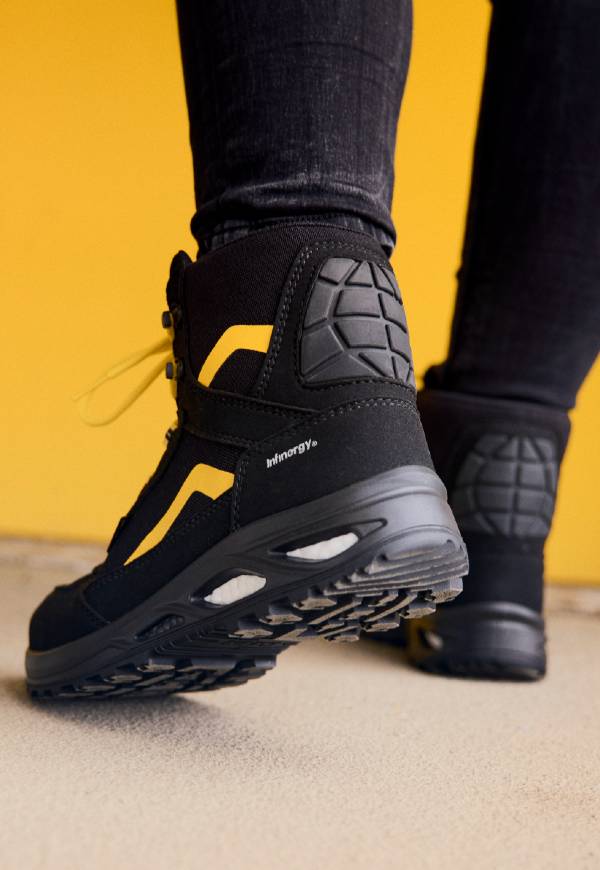
Safety Standards
At StitchKraft, safety is not just a feature — it is the foundation of every safety boot and work shoe we offer.
All of our safety footwear is compliant and certified to the relevant international safety standards, including DIN EN ISO 20344 and DIN EN ISO 20345. These standards cover the essential testing requirements for safety footwear, helping ensure that every product we supply meets strict performance, protection and quality criteria.
While comfort, durability, functionality and style are all important parts of great work footwear, the most important requirement is always workplace safety. In today’s global manufacturing environment, the full process chain — from materials and components through to final assembly — needs to be transparent, reliable and compliant with recognised safety standards.
All PPE products in our range are tested regularly and must comply with the applicable safety requirements. But our approach to protection goes beyond the standard 200 joules toe-cap impact resistance required for certified safety footwear.
Depending on the model, our boots and shoes may also include additional protective features such as:
- Penetration-resistant midsoles
- Ergonomic footbeds for all-day support
- Electrostatic discharge protection
- Lightweight safety materials
- Metal-free and leather-free options
- Slip-resistant, fuel-resistant and oil-resistant outsoles
- Durable uppers designed for tough working conditions
These features help deliver a higher level of protection, comfort and confidence for workers across a wide range of industries.
Watch the short clip below to see how ELTEN safety footwear is tested for safety.

SAFETY - Nothing Is More Important To Us
Footwear that conforms to AS/NZS 2210.3 (ISO 20344:2011, MOD) must be fitted with safety toecaps as a basic requirement. Safety toecaps at this standard meet the requirements of impact resistance at an energy level of 200 Joules and the requirements of compression resistance at a compression load of 15kN. Footwear conforming to these standards should be selected where there is a risk of injury to toes from objects falling or striking the feet.
Impact resistance is tested when a steel striker with a mass of 20kg is adapted to fall freely from a height of a metre and strike the safety toecap. A clay cylinder is placed under the cap and the clearance is measured after the test.
Compression equipment is used to test the resistance of a toecap by subjecting the toecap to a load of 15kN. As per the impact resistance test, a clay cylinder is placed under the toecap and the clearance is measured.
The AS/NZS 2210.5 (ISO 20344:2011, MOD)Standard is commonly referred to as the Occupational Footwear Standard and can meet all the other criteria of Safety Footwear with the exception that there is no safety or protective toecaps incorporated into the shoe.
Common areas of testing to ensure compliance with the footwear standard
+ Slip resistance of soles - The shoes must pass a minimum resistance test on both steel and tiled surfaces
+ Testing of specific ergonomic features - The footwear is put through a variety of testing including walking, kneeling and crouching, climbing stairs and more. Suitability is then recorded
+ Upper and lining materials testing - Includes a recording of the thickness, tear strength, flexing, pH value, chromium V1 content and abrasion resistance of the shoe
+ The outsole of the shoe is tested on its tear strength, abrasion resistance, flexing resistance, hydrolysis and resistance to fuel oil
Safety footwear classes and features
Basic shoe with Toe Protection Cap
PLUS:
+ Closed heel area
+ Antistatic
+ Heel energy absorption
+ Fuel resistant
Same Features as S1 standard
PLUS:
+ Penetration resistant midsole
Same Features as S1 standard
PLUS:
+ Water penetration and absorption resistant
Same Features as S1 standard
PLUS:
+ Water penetration and absorption resistant
+ Penetration resistant midsole
+ Corrugated sole