
Safety Footwear for the Chemical & Petrochemical Industry: Protection, Comfort and Performance
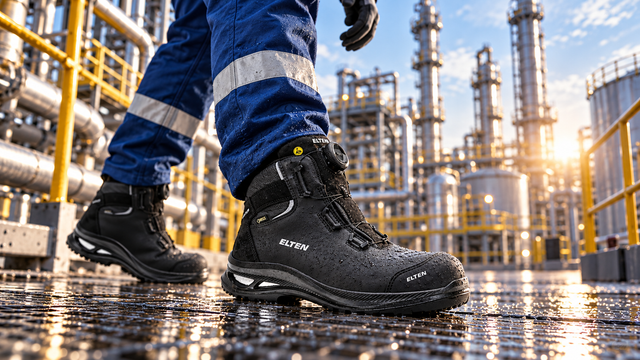
From chemical exposure and slippery surfaces to static electricity and long shifts on concrete, chemical and petrochemical workplaces demand more from safety footwear. Here's what to look for when choosing the right boots for the job.
Working in a chemical plant, refinery or petrochemical facility comes with its own set of challenges. Hazardous substances, wet surfaces, heavy equipment and potentially explosive atmospheres all make workplace safety a priority.
But there's another challenge that often gets overlooked: comfort during long shifts on hard industrial floors.
Choosing the right safety footwear means finding the balance between protection, durability and all-day comfort.
German safety footwear manufacturer ELTEN, with more than 115 years of footwear expertise, has developed a range of technologies designed to address these challenges.
1. Slip Resistance: Staying on Your Feet in Demanding Environments
One of the most common workplace hazards in chemical and petrochemical facilities isn't necessarily chemical exposure itself. It's slipping, tripping or falling.
Workers regularly move between concrete floors, metal grating, tiled surfaces, outdoor areas and potentially wet or contaminated walkways.
What to look for:
- Slip-resistant outsoles suited to the surfaces encountered
- Robust tread patterns for dependable traction
- Outsole materials appropriate for contact with oils, fuels and other substances
- Stable footwear construction that supports secure footing
Why rubber outsoles matter
ELTEN uses rubber outsoles on selected safety footwear designed for demanding industrial environments.
Depending on their construction, these outsoles offer resistance to oils, fuels and various chemicals, together with excellent durability and resistance to abrasion.
Selected rubber outsoles can also withstand short-term contact with hot surfaces up to 300°C.
The benefit: Robust footwear with outsole properties matched to the demands of the workplace.
Importantly, resistance to oil or fuel does not automatically mean resistance to every chemical. The suitability of footwear must always be assessed against the actual substances and exposure conditions involved.
2. ESD Protection: Managing Static Electricity
In many chemical and petrochemical operations, static electricity is more than an inconvenience.
Refineries, chemical processing plants and fuel-handling facilities can contain areas where flammable gases, vapours or other hazardous substances create potentially explosive atmospheres.
Controlling electrostatic discharge is therefore an important part of workplace safety.
How ESD footwear works
ESD-compatible safety footwear is designed to help dissipate electrostatic charges in a controlled manner when used as part of a suitable grounding system.
ELTEN offers a wide range of ESD-compatible safety boots and shoes that can support electrostatic control requirements in relevant industrial environments.
The benefit: Footwear that forms part of a broader workplace approach to managing static electricity.
For hazardous areas, footwear selection must follow the site's risk assessment and applicable electrostatic-control requirements. ESD marking alone does not establish suitability for every explosive atmosphere, and footwear cannot replace other required protective measures.
3. Chemical Exposure: Why Upper Materials Matter
In chemical and petrochemical workplaces, accidental splashes and contamination can occur during processing, cleaning, maintenance or handling operations.
Footwear materials therefore matter.
The advantages of leather uppers
High-quality leather offers several practical benefits for industrial safety footwear:
- Durability: Designed to withstand regular wear in demanding workplaces.
- Ease of cleaning: Smooth leather surfaces can be easier to clean than some textile materials.
- Shape retention: Helps maintain footwear structure over time.
- Flexibility and breathability: Supports comfortable everyday wear.
ELTEN uses premium leather in many of its industrial safety boots, combining traditional footwear craftsmanship with modern protective technology.
However, leather is not inherently chemical-proof. Certain chemicals can penetrate or damage footwear materials, and contaminated footwear may need to be removed from service.
The benefit: Durable, practical upper materials for everyday industrial use, with chemical-specific protection determined by the workplace risk assessment.
4. Waterproof Yet Breathable: The GORE-TEX Advantage
Water is widely used in chemical and petrochemical facilities, particularly during equipment cleaning, filter maintenance and washdown operations.
Wet footwear can quickly become uncomfortable, especially when workers are on their feet for extended periods.
How GORE-TEX helps
Selected ELTEN safety boots feature a GORE-TEX waterproof membrane.
This technology is designed to provide two important benefits:
Waterproof protection: Helps prevent external water from entering the footwear.
Breathability: Allows moisture vapour generated inside the footwear to escape, helping maintain a more comfortable internal environment.
The result is footwear designed to keep feet drier and more comfortable during wet working conditions.
GORE-TEX provides waterproof protection against water, not universal protection against hazardous chemicals. Chemical exposure requires separate assessment of the entire footwear construction.
The benefit: Waterproof and breathable comfort for workers who regularly encounter wet industrial environments.
5. All-Day Comfort: Reducing the Impact of Hard Floors
Industrial workers can spend eight, ten or even twelve hours walking or standing on concrete, tiles and other hard surfaces.
Over time, repeated impact can contribute to tired feet and general discomfort.
This is where cushioning technology becomes particularly important.
WELLMAXX: Powered by Infinergy® from BASF
ELTEN's WELLMAXX footwear incorporates Infinergy®, an innovative expanded TPU cushioning material developed by German chemical company BASF.
Originally developed for applications requiring responsive cushioning, Infinergy combines elasticity, resilience and low weight.
When walking, the material compresses under load and rebounds as pressure is released.
This helps cushion repeated impact while providing a responsive feel underfoot.
For workers covering significant distances across hard industrial floors, this can make a meaningful difference to everyday comfort.
The benefit: Shock-absorbing footwear designed to help reduce the impact of repeated steps and improve comfort throughout long shifts.
6. BOA® Fit System: Fast, Precise and Convenient
When working around machinery, chemicals and complex industrial equipment, practical footwear design matters.
Traditional laces can become loose, require repeated adjustment or take time to undo.
A better way to adjust your boots
Selected ELTEN safety boots use the BOA® Fit System, which allows workers to adjust their footwear using a precision dial.
Key advantages include:
- Fast adjustment: Tighten or fine-tune the fit quickly.
- Secure fit: Helps maintain consistent tension throughout the shift.
- No loose lace ends: Eliminates traditional dangling shoelaces.
- Convenient removal: The quick-release mechanism allows rapid opening of the footwear.
The ability to remove footwear quickly can be particularly useful when dealing with accidental contamination, provided the footwear's overall design permits safe removal.
The benefit: Greater convenience, consistent fit and easier on-and-off operation throughout the working day.
7. Ankle Support and Ladder Grip: Stability Where It Counts
Working in chemical processing plants often involves moving between platforms, climbing access ladders and navigating uneven industrial surfaces.
These activities place additional demands on footwear stability.
Ankle support
Selected ELTEN models feature BIOMEX Protection, a specialised system designed to stabilise the ankle while accommodating natural foot movement.
The system provides additional support around the ankle area and is designed to help resist unwanted twisting movements.
Ladder grip
Workers accessing tanks, reactors and elevated machinery can benefit from footwear featuring a defined heel edge and tread designed for secure contact with ladder rungs.
Selected ELTEN models provide specialised ladder-grip features.
The benefit: Additional stability and support for workers operating across challenging industrial environments.
These technologies are model-specific, and footwear selection should always match the actual working conditions.
8. The Right Fit Matters as Much as the Right Features
Even technically advanced footwear can become uncomfortable if it doesn't fit properly.
Pressure points, insufficient toe room and poorly fitting heels can all contribute to discomfort during long shifts.
ELTEN recognises that feet vary considerably in width, shape and volume.
That's why the manufacturer offers different fitting concepts, including wide-fit designs, roomy toe boxes and specialised footbeds.
For workers who spend much of their day on their feet, finding the correct fit can be just as important as selecting the right outsole or protective features.
The benefit: More comfortable footwear that supports workers throughout demanding shifts.
Choosing the Right ELTEN Safety Footwear
Different roles within chemical and petrochemical facilities require different footwear.
For maintenance technicians, plant operators and workers moving between wet processing areas, a waterproof boot with robust traction and comfortable cushioning may be particularly useful.
For workers handling chemicals or operating in potentially explosive environments, the site's specific PPE and electrostatic-control requirements must take priority.
ELTEN TERENCE XXG PRO BOA GTX
The TERENCE combines several technologies particularly relevant to industrial workers:
- GORE-TEX waterproof and breathable membrane
- BOA Fit System for fast, precise adjustment
- Robust rubber outsole
- ESD properties
- Safety toe protection and penetration-resistant construction
- Cushioning designed for long-shift comfort
It offers a practical combination of protection, weather resistance and everyday comfort for suitably assessed industrial applications.
Explore ELTEN safety footwear for chemical and petrochemical workplaces
German Engineering. Local Australian Expertise.
ELTEN has been developing safety footwear in Germany since 1910, combining generations of craftsmanship with innovations in comfort, fit and protective technology.
As ELTEN's exclusive distributor in Australia and New Zealand, STITCHKRAFT brings this expertise to local workers and businesses.
We support individual customers, safety professionals and procurement teams with product selection, technical information and advice on matching footwear to workplace needs.
With local stock in Melbourne, a Tullamarine showroom and Australia-wide delivery, we make premium European safety footwear accessible to Australian industry.
Protect Your Feet. Support Your Workforce.
The right safety footwear is more than a compliance requirement. It's an investment in employee comfort, workplace performance and reliable everyday protection.
Whether you're selecting footwear for yourself or reviewing safety footwear across an industrial workforce, STITCHKRAFT can help you explore the ELTEN range and identify suitable options for further technical assessment.
EXPLORE SAFETY FOOTWEAR FOR CHEMICAL & PETROCHEMICAL INDUSTRIES
For corporate enquiries, footwear trials or technical specifications, contact the STITCHKRAFT team at hello@stitchkraft.co.
Important: Safety footwear must be selected according to the hazards of the workplace. Features such as ESD, water resistance, oil-resistant outsoles and GORE-TEX membranes do not establish protection against all chemicals or suitability for all hazardous environments. Always consult the relevant product technical documentation and your workplace PPE requirements.